
Read time: under 5 minutes
Frame The Loss Prevention Process As Mutually Beneficial
One of the main reasons end Clients may not consistently review and act on incident reports is simple: they are not the ones directly losing money. As a result, loss prevention may not feel like a priority worth adding to their workflow.
To improve engagement, position loss prevention as a mutually beneficial partnership, rather than a process where the Operator simply delivers bad news every week. Help the end Client understand that behavior in the market may be indicative of a broader workplace issue.
Someone who repeatedly steals product, for example, may also be more likely to engage in other forms of theft or time-related misconduct at work.
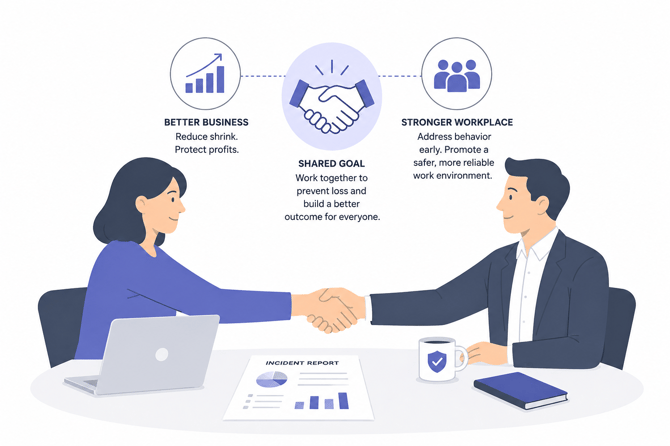
This gives the end Client a tangible reason to participate in the process and address incidents before shrink gets out of hand. Outside of directly billing for shrink, creating this shared incentive may be one of the most effective ways to ensure both parties are working toward the same goal.
Check Reports Weekly
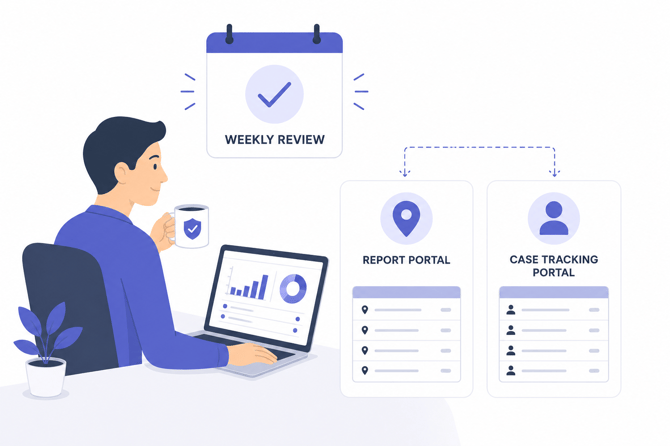
Even if you don’t plan to share reports every week, it’s important to stay current on incidents at your markets. Incorporating a regular review schedule into your loss prevention routine ensures you always have a clear picture of what’s happening across your locations.
It’s easy for loss prevention to become less of a priority when other responsibilities come up. However, building a habit of checking reports weekly and understanding what’s happening on the ground is a crucial first step toward identifying recurring issues and driving down shrink.
Operators can review incidents in either the Report Portal or Case Tracking Portal. The Report Portal organizes incidents by location, making it easy to see activity at each market over a selected time frame. The Case Tracking Portal organizes incidents by case/offender, making it easier to track an individual’s activity across multiple incidents.
Curate and Share Repeat Offenders
The Case Tracking Portal is increasingly becoming the preferred way to share incidents because it allows Operators to provide end Clients with a targeted, actionable list of repeat offenders.
Simply sharing every incident from the previous week can be overwhelming. It gives the end Client little guidance on who to prioritize, and in most cases, it isn’t realistic for them to address every individual who appears in a weekly report.
Instead, focus on the most egregious repeat offenders – such as individuals with 2–3 or more incidents within the past month. From our observations, repeat offenders typically represent only around 15% of the offender population, but account for at least 50% of all incidents.
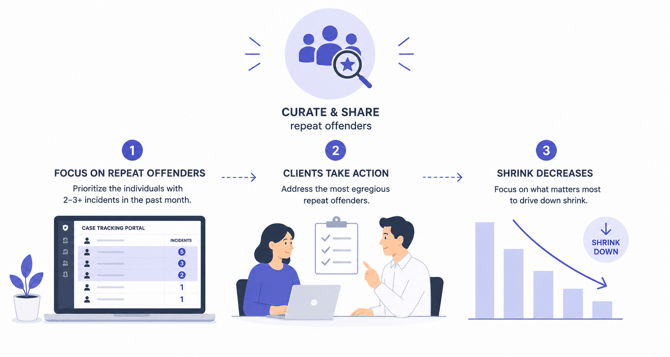
By prioritizing this relatively small group, Operators and end Clients can focus their efforts where they are likely to have the greatest impact. Addressing repeat offenders may therefore be one of the fastest and most efficient ways to reduce incidents, change the culture at the location, and begin driving down shrink.
Follow Up On Reports Not Viewed By Clients
After sharing reports, you can track whether your end Clients have viewed them and when.
There are multiple ways to check whether a report you shared has been viewed by your end client. You can use the Access Logs in the Report Portal for a more detailed view, or the status cards in the Case Tracking Portal for a quick overview, depending on the level of detail you need.
If you don’t see activity within a few days of sharing a report or Case, follow up with your contact. This is a good opportunity to make sure they received the report, are aware of your latest findings, and understand any action that may be needed.
Overall, alignment, consistency, and sharing targeted reports are the biggest pieces to driving down shrink in both the short and long term. Panoptyc’s most successful customers have seen marked improvements not because they did anything extraordinary, but because they incorporated loss prevention into their weekly routine and created a genuine partnership with their clients. While not every end Client will ultimately be the right partner for reducing shrink, for the majority of customers, these fundamental practices can go a long way toward maintaining a healthy micro market.