
Report Builder gives users more control over which incidents are included in their custom reports before sharing them.
Users can select specific incidents, create a custom report, give the report a custom title, and manage previously created reports from the Reports Dashboard.
This makes it easier to create more focused reports based on the incidents that are most relevant to a specific client, review, or follow-up.
Note: Copy/paste URL sharing will still work to support existing workflows in the app.
Why Use Report Builder?Report Builder gives users more flexibility over the information included in a report.
With Report Builder, users can:
- Choose which incidents to include in a report
- Create more focused reports for specific situations or clients
- Add a custom title to make reports easier to identify
- Share reports with specific users or all guest users
- Access previously created reports from one centralized dashboard
- Keep a historical record of reports that have already been created and shared
How It Works
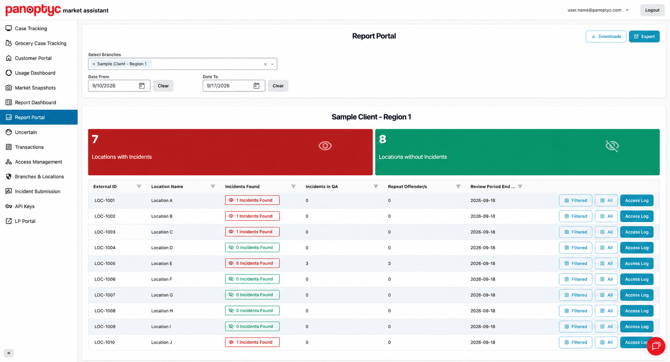
- From the Report Portal, users can select either the Filtered Incidents or All Incidents Report Builder link.
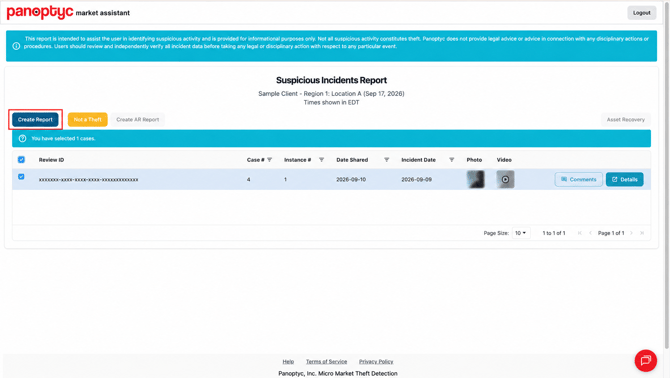
- From either link, users will be redirected to the Suspicious Incidents Report page. Users can select the incidents they want to include in their report. Once the incidents have been selected, click Create Report.
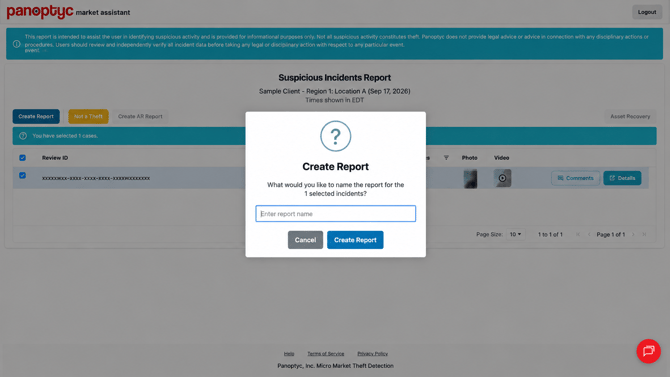
- Clicking the Create Report button will open a pop-up window where users can enter a custom title for their report.
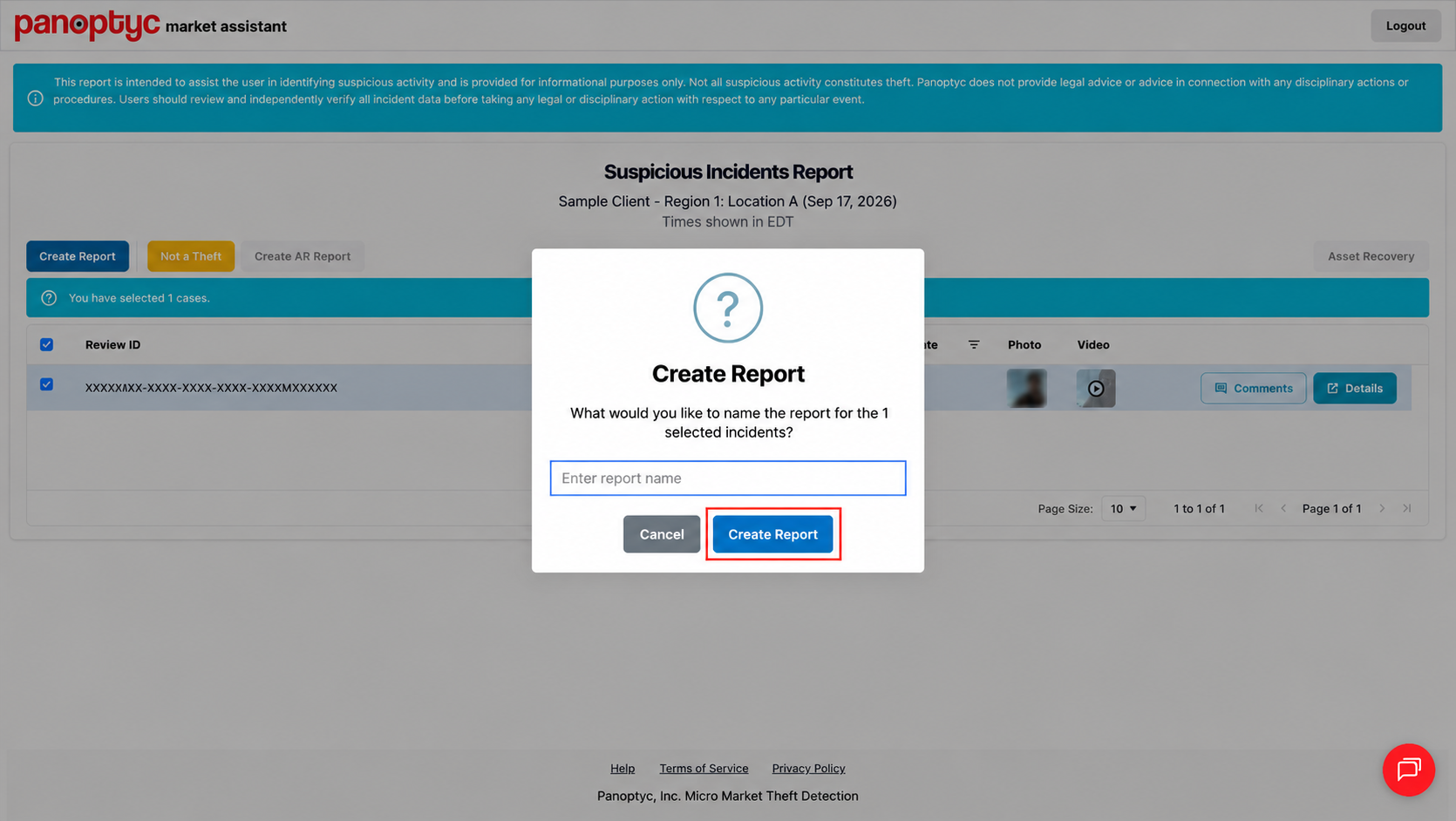
- Once the custom title has been entered, click Create Report.
- Users will then be redirected to their newly created report.
Reports are immutable, which means the report will only include the incidents selected at the time it was created. Any new incidents validated from a case already included in the report will not automatically be added.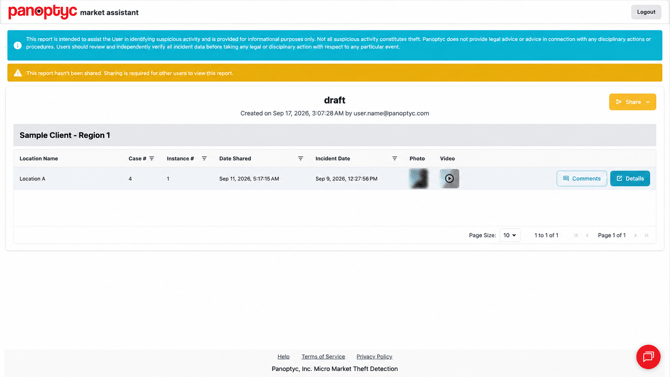
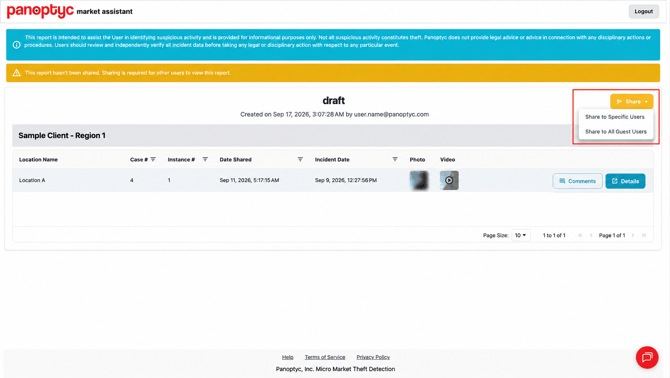
- To share the report, click Share. Users can choose whether to share the report with:
- Specific users
- All guest users
No changes in our share flow functionality.
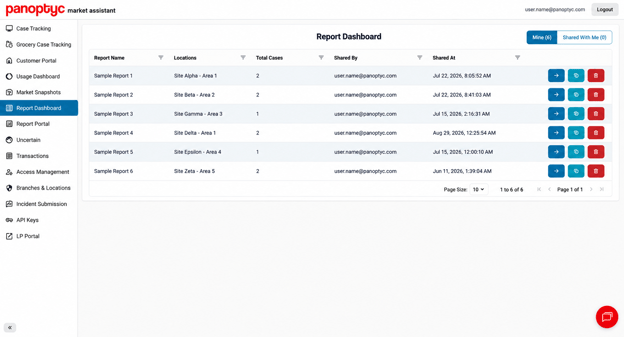
All reports created through Report Builder can be found in the Reports Dashboard.
Branch users are able to manage all reports created, track historical reports, and delete reports from this page.
The Reports Dashboard also makes it easier to return to previously created reports without needing to recreate or search for the original incident selection.
Depending on the user's permissions, the dashboard may include:
- Mine – Reports created by the user
- Shared With Me – Reports that have been shared with the user
 Guest User Reports
Guest users can also access their own Reports Dashboard to view reports that have been shared with them.
Guest users can navigate to the dashboard using the following link:
https://app.panoptyc.com/shared/guest-reports
Note: Some branch users may also have guest user permissions, and vice versa. Because the Mine and Shared With Me tabs are available to both branch and guest users, the same reports may appear in both dashboards depending on the user's permissions.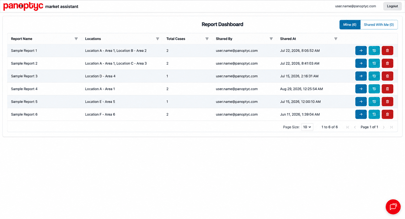
Things to Keep in Mind
When creating and managing reports:
- Select all required incidents before clicking Create Report.
- Use a clear and descriptive report title so the report is easier to identify later.
- Remember that reports are saved as a snapshot of the incidents selected at the time of creation.
- If additional incidents are validated later, they will not automatically be added to an existing report.
- A new report should be created if newly validated incidents need to be included.
- Existing report-sharing options remain unchanged.
Key Takeaway
Report Builder makes it easier to control exactly what information is included in a report before it is shared.
By selecting the incidents that matter most, adding a custom report title, and managing reports through the Reports Dashboard, users can create more focused reports while keeping their reporting history organized in one place.